




























|
Getting
ready for winter in the North Country By GEORGE EARL, Adirondack Daily Enterprise : September 17, 2008 SARANAC LAKE NY- The old adage that there are two seasons in the Adirondacks - winter and
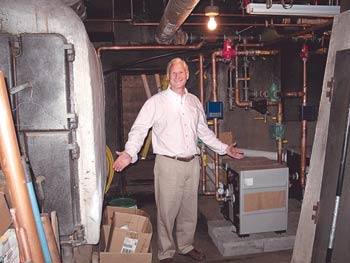
getting ready for winter - has been refreshed for many this season as year-round residents figure out creative ways to insulate themselves from high heating bills from November to May. New furnace Real estate broker Rob Grant said he's replacing his Saranac Lake office/apartment building's antiquated heating system with a super-efficient propane furnace, but he said it took more than the threat of global warming to get him to do it. "Yeah, you want to go green," Grant said, "but it takes an energy crisis to make you do it." Grant
owns a 23,000-square-foot commercial building on Broadway where he replaced an
80-year-old oil furnace about the size of a small Volkswagen with a new, high-efficiency
propane furnace not much larger than a mini-fridge. The three-story building houses
his business, other retail and office spaces, and several residential apartments
on the third floor. "For us, the savings were simply too much to ignore." he said. "We're projecting a 40 percent savings." Insulation Dan Reilly, the managing partner of HomEnergy Services Inc. in Saranac Lake, sells heating fuel and high-efficiency furnaces. He said there are many opportunities for homeowners to save on their fuel bill and that it doesn't necessarily start with getting a new furnace. "Insulation comes first," Reilly said. "Insulation comes before windows and doors, which come before a new furnace." But there are exceptions, he said. "If the insulation is OK and the furnace is really old, it might be more cost-effective to buy a new furnace." Reilly said the most common furnace in homes also happens to be one of the most inefficient. "The most common thing people have is a hydronic boiler (hot water system) with a coil," he said, explaining that circulating hot water is actually very efficient but that the coil that heats the water isn't. "Hot water coils are going to be a thing of the past because the coil is always hot. So on a mild day, say 20 degrees, those boilers don't need to be at 100 degrees when it can send out 80-degree water." Low-cost improvements Another smart move, according to Reilly, is to replace thermostats with automatic sensors that adjust the temperature throughout the day and night. Other inexpensive improvements, like replacing old radiator valves, can save money as well. "Some people complain that they have a room that gets really hot," Reilly said. "Those radiators are wasting energy and probably need new valves." Clyde Rabideau, president of the Rabideau Corp. construction company based in Saranac Lake, recommends starting with caulk. "The first thing to do is a good $3 caulk job. Look for air infiltration points, such as around windows and electrical boxes," he said. Wayne Reisfield, the assistant manager at Curtis Lumber in Ray Brook, said it's important to get to know the energy-saving products that are available. Energy audit Art Olson, a program implementer for the New York State Energy Research and Development Authority, recommends starting with an energy audit by an Energy Star-rated contractor. They can test for air leakage, combustion safety, molds and moisture content, and energy efficiency, and then give advice on the best ways to improve the safety and energy efficiency of your home. This audit is so important, Olson said, because simply making a home airtight without allowing for proper ventilation poses health and fire hazards. Tough times all around Reilly said many of his home heating oil customers are having a tough time paying their heating bills from last year, plus coming up with the money for this year. "We have people who haven't paid their bills from last year," he said. "People who are successful in the community - landlords and property owners, people seen as well-off - are struggling, not just people who qualify for HEAP (the federal Home Energy Assistance Program)." Contrary to popular opinion, Reilly said, oil companies are feeling the pinch as well. "When someone doesn't pay, that's tough for us," he said, adding that profit margins are small for middlemen in the oil business. "All we are is a trucking company, and the cost of diesel is going up."
Adirondack Energy Efficient Houses Elements
of an Energy Efficient House 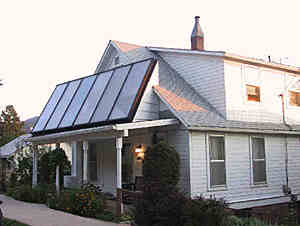
Designing and building an energy-efficient home that conforms to the many considerations faced by home builders can be a challenge. However, any house style can be made to require relatively minimal amounts of energy to heat and cool, and be comfortable and healthy. All energy efficient homes have the following elements:a high R-value, tightly sealed thermal envelope; controlled ventilation; and lower than usual heating and cooling bills. Some designs are more expensive to build than others, but none of them need to be extremely expensive to construct. Recent technological improvements in building elements and construction techniques, and heating, ventilation, and cooling systems, allow most modern energy saving ideas to be seamlessly integrated into any type of house design without sacrificing comfort, health, or aesthetics.
| |||||||||||


 Need
Directions? Need
Directions? |  Guestbook Guestbook
|  Weather Weather
|
 Advertising Advertising
|  Send
Email Send
Email | Comments
|

Dining | Summer Sports | Winter Sports | Arts & Crafts | Attractions
Shopping | Adirondack Kids | Adirondack Lifestyles | Education
Business Profiles | Community Links | Business Directory | Classifieds
Adirondack History | Bulletin Board | Chat Room | Guestbook Comments | Return Home
New York State
& Vermont
Travel Guide Network
We
invite you to visit one of the largest and most comprehensive award winning travel
networks in New York State
& neighboring Vermont .
Choose your visitor
guide by clicking on any one of the links below!
Adirondacks.com
| AdirondackRealEstate.com |
AdirondackRentals.com |GlensFalls.com
| LakePlacidNY.com | SaranacLakeNewYork.com
| Saratoga-NewYork.com | Upstate-NewYork.com
| LakeChamplainValley.com | Burlington-Vermont.com
| ThousandIslandsNewYork.com |
MaloneNY.com | NorthCreekNY.com
| WestportNewYork.com | CliftonParkNewYork.com
|
Albany-New-York.com
| Troy-NewYork.com | Utica-NewYork.com
| Rome-NewYork.com | WarrensburgNewYork.com
| Potsdam-NewYork.com | AdirondackHighPeaks.com
| Canton-NewYork.com
| Massena-NewYork.com | Plattsburgh-NewYork.com
| LakePlacid-NewYork.com | GlensFalls.net
| SchroonLakeNewYork.com | KeeneNY.com
| KeeneValleyNY.com | ChestertownNY.com
| GlensFallsNY.com | TiconderogaNewYork.com
| TheChamplainValley.com | Champlain-Valley.com
| ChamplainValleyRegion.com
|
ChamplainValley.net | SaratogaSpringsRegion.com
| Watertown-NewYork.com |
SaranacLakeNY.com | HighPeaksWilderness.com
| VisitUpStateNewYork.com | VermontTravelGuides.com
| Burlington-Vermont.com | StAlbans-Vermont.com
| Rutland-Vermont.com | Middlebury-Vermont.com
| Montpelier-Vermont.com
|
Bennington-Vermont.com
| Brattleboro-Vermont.com
| NewYorkSkiing.com
|
New YorkHiking.com | AdirondackHiking.com
| AdirondackFishing.com
|
AdirondackCamping.com
| AdirondackSkiing.com
| LakePlacidSports.com
| LakePlacidSkiing.com
| SaratogaSpringsRegion.com
|
SaratogaInns.com
| SaratogaHotels.com
| SaratogaAttractions.com
| SaratogaSpringsDining.com
|
SaratogaSpringsLodging.com
| SaratogaSpringsRestaurants.com
|
SaratogaDirectory.Com
| LakePlacidNY.com
|
LakePlacidHotels.com |
LakePlacidShopping.com | LakePlacidRestaurants.com
| LakePlacidInns.com
|
LakePlacidDining.com
| LakePlacidResorts.com
| LakePlacidSports.com |
LakePlacidSkiing.com |
LakePlacidHockey.com
| LakePlacidSchools.com
| OldForge-NewYork.com | AdirondackRestaurants.com
AdirondackWeddings.com | AdirondackCamping.com
| AdirondackFishing.com
|
AdirondackShopping.com | AdirondackLodging.com
| AdirondackHotels.com
| AdirondackDining.com |
AdirondackSkiing.com | AdirondackWeather.com
| AdirondackCrafts.com | VillageofLakeGeorge.com
|
DiscoverLakeGeorge.com
|
Lake-George-NewYork.com
| LakeGeorgeClassifieds
We
invite you to visit our comprehensive network of Florida Travel Web Sites:
Florida Visitor
Guides.com
www.Daytona
Visitor Guide.com
www.Daytona Travel Guide.com
www.Daytona Beach Visitor Guide.com
www.Visit Daytona Florida.com
www.New
Smyrna Beach Guide.com
www.New
Smyrna Hotels.com
www.New
Smyrna Rentals.com
www.New Smyrna Beach Lodging.com
www.New Smyrna Beach Restaurants.com
www.New Smyrna Beach Dining.com
www.New Smyrna Beach Shopping.com
www.New Smyrna Beach Weather.com
www.New Smyrna Florida.com
www.New-Smyrna-Beach-Florida.com
Anna Maria Island Guide.com
Anna Maria FL.com
Anna-Maria-Island-Florida.com
Anna-Maria-Island-Rentals.com
Anna-Maria-Island-Real-Estate.com
Anna Maria MLS.com
Anna
Maria Island Beach Rentals.com
Anna
Maria Island Photos.com
Anna
Maria Property.com
Anna Maria
Island MLS.com
Anna
Maria Island Real Estate Agents.com
Anna-Maria-Island.org
GulfofMexicoWeather.com
FloridaVisitorGuides.com

Saranac Lake, New York 12983
Phone: 518-891-3745 Fax: 518-891-3768
E-Mail: Adirondacks.com
This website
is owned and operated by
adirondacks.com internet publishing group.
For advertising and editorial content,
please contact Rob Grant;
adirondacks.com
reserves the right to reject,
modify or cancel any advertising at its sole
discretion.
© Adirondacks.com - all rights reserved